Plunge pricing: when the grid pays you to switch on the dishwasher
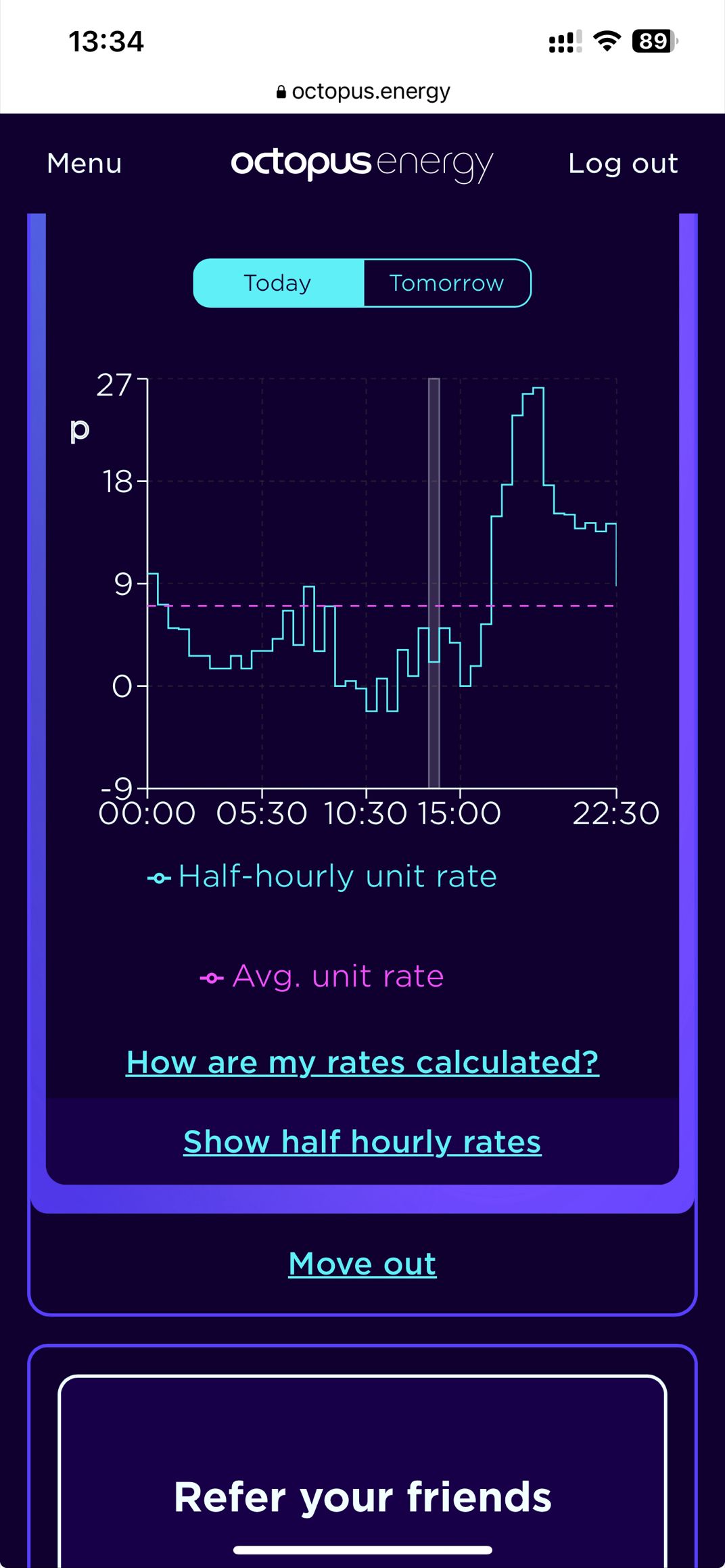
The setup: I'm on a UK tariff that passes wholesale prices through to the consumer in half-hour blocks. When wholesale prices go negative - and they have, dozens of times this year - I get a 'plunge pricing' alert. The signal is: please draw load now. Run the dishwasher, charge the EV, heat the water tank. The more I use, the more I get paid.
Why prices go negative
Wholesale electricity prices are set by the marginal cost of meeting demand, in real time. When the wind is blowing hard at 3am and demand is low, there's more renewable generation available than the grid can absorb. Wind farms have near-zero marginal cost - once the turbines are spinning, generating an extra megawatt-hour costs nothing. They'd rather sell at a loss than curtail, because curtailment forfeits subsidies tied to actual generation.
The result is short windows where the system genuinely needs someone - anyone - to consume the surplus. Negative prices aren't a market failure; they're the market doing its job, signalling that storage and demand-response are worth more than they were a minute earlier.
Why the consumer side feels weird
The intuitive objection is that incentivising consumption can't be good for the environment. It feels like the system is paying you to waste energy. But that mental model assumes a fixed quantity of clean generation that gets diluted by extra demand. The actual physics is the opposite - at the moment the alert fires, the surplus exists whether you use it or not. If you don't, it gets curtailed, and the marginal CO2 cost of you running the dishwasher right now is genuinely zero or negative.
The bit that is a problem is timing. Most household appliances aren't grid-aware. Dishwashers run when the dishes are dirty; EVs charge when the driver plugs in. Plunge pricing only works if there's enough demand-flexibility on the consumer side to absorb the surplus when it appears. Right now there isn't, which is why the prices go negative in the first place.
What this is actually about
Negative price events are an early signal that the grid is changing shape. The economics will only stabilise when storage (home batteries, EV-to-grid, large-scale hydrogen) and demand-flexibility (smart appliances, smart tariffs, distributed thermal load) catch up to the volatility of renewable supply. Until then, plunge pricing is the grid asking nicely for help, and it's slightly bizarre that the answer is whatever you happened to plug in.
I ran the dishwasher and the washing machine, and earned about £1.20. The number isn't the point. The point is that grids are becoming legible in a way they weren't ten years ago, and the household consumer is now part of the balancing equation, whether they realise it or not.



Discussion