Apple Intelligence as a layered bet
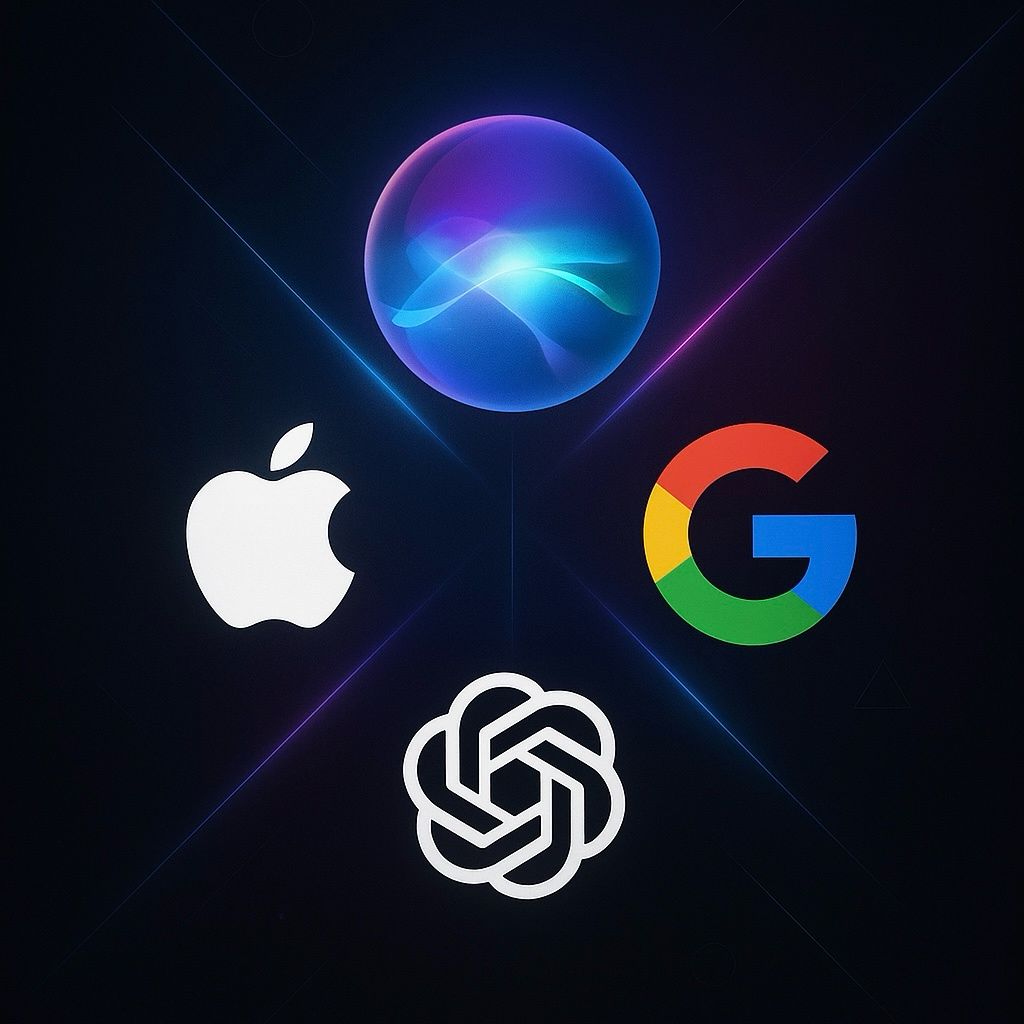
The layered model that's emerging from the public reporting looks like this. On-device intelligence runs on Apple's own models, optimised for the neural engine in current Apple silicon. This is the layer that handles personal context, privacy-critical actions, and the fast low-latency system behaviours. Call it the base layer. It is where the iPhone's local AI lives, and it's where Apple has a hardware moat that nobody in the Android world is within two generations of matching.
ChatGPT - and potentially other partners in future - is integrated as an opt-in augmentation. A user can route specific, expert-level queries out to the partner model, with explicit consent per interaction. This is the middle layer. It isn't the default. It's a capability surface users can reach for when the base layer doesn't suffice. The framing is deliberately additive, not substitutive.
For the largest, most complex reasoning tasks, the reporting suggests Apple is licensing frontier models - Gemini has been the most-discussed - to run privately under Apple's control. This is the top layer. It handles the tasks the base model can't, the partner model doesn't specialise in, and the user hasn't explicitly routed to a third party. It is operated by Apple, inside Apple's infrastructure, with Apple managing the privacy and disclosure surface.
What the architecture is actually optimising for
Read as a partnership strategy, this looks like indecision. Read as an architecture, it's a position almost nobody else in the industry can occupy. The key property is that no layer is critical. If Apple's own models improve faster than expected, the middle and top layers shrink. If a partner model becomes strategically problematic, Apple swaps it without touching the user-facing experience. If a frontier model emerges from an unexpected lab, Apple adds a new option at the top layer without rearchitecting anything.
This is the same move Apple made with maps, music, and search, translated into the AI era. Own the surface, commoditise the supplier. What's new this time is that the supplier has very high fixed costs. Training a frontier model is not like running a map data pipeline. The bargaining dynamics are different, and the long-term question is whether model providers can actually be commoditised the way map providers were. That is the genuinely open strategic question.
The privacy lever
The layered architecture is also the only way Apple can honestly market 'personal context' to a European consumer in the post-DMA environment. On-device processing is the cleanest story for data that should not leave the device. The partner-model layer requires explicit user consent, which satisfies the baseline regulatory surface. The private-frontier layer - running licensed models inside Apple's infrastructure with contractual constraints on retention and training use - is a category the regulatory framework hasn't fully caught up to, and the specific clauses in that contract are where the real negotiation happens.
This privacy-by-architecture position is difficult for any competitor to copy. Google runs its frontier model inside its own infrastructure, but its commercial model depends on signals from user behaviour that Apple has committed to not extracting. Microsoft has the layered cloud-and-edge story but lacks the hardware base layer. Amazon has neither the hardware nor the consumer brand. The layered bet works specifically because of who Apple is, and imitation is harder than it looks from outside.
The architecture is the strategy. No layer is critical.
The brand risk
The failure mode of the architecture is that Apple's brand absorbs the errors of every layer, including the ones Apple doesn't own. When a licensed model hallucinates something embarrassing inside an Apple interface, the headline will read 'Apple Intelligence failure', not 'licensed partner failure'. Most Apple users will not be aware of the layering. They'll experience the layer that fails them, attribute it to 'Siri', and move on. This creates a brand-risk surface that Apple is historically unused to, and that nobody in the public strategy discussion is pricing accurately.
The licensing contracts presumably cover this. The question is whether they cover it enough. Apple's leverage over partner-model quality is limited by the fact that the partner knows Apple has no realistic option to build a frontier model in-house on a similar timeline. The negotiation is real, but it's not one-sided, and the public framing that has Apple dictating terms is probably more optimistic than the actual commercial reality.
The enterprise read
The layered architecture reads differently in the enterprise than in the consumer story. For a regulated organisation deploying iPads - a bank, a hospital, a law firm - the pluggable cloud layer is materially more attractive than any single-model alternative. The organisation can disable the cloud layers entirely in enterprise management policy, keep the base-layer intelligence running on-device, and have a functional assistant with a clean privacy story. No other major consumer-AI platform currently offers this cleanly, and it is quietly one of the strongest enterprise positions in the market.
This is the layer of the story that the consumer-focused reporting keeps underplaying. Apple doesn't need to win the frontier race to win the enterprise deployment race. The layered architecture makes it credible in regulated environments in a way that OpenAI and Google still struggle with, and the enterprise revenue from that position will be substantial regardless of what the consumer-AI market ends up looking like.
What to watch
The signal I'd watch for is the UI disclosure question. When Apple ships a response generated by a partner or licensed model, will the source be clearly labelled, or quietly blurred? The instinct will be to blur - keep the experience unified. Regulators will not allow that to last forever, and the specific rules about AI output disclosure are still being written. Apple's approach here will tell you a lot about how the architecture is actually being governed, as distinct from how it's being described in public.
The architecture is strategically coherent. The execution will determine whether it's strategically successful. My best guess is that the base layer will remain Apple's strongest asset, the middle layer will become commoditised within three years, and the top layer will be where the most interesting quiet fights happen over privacy, liability, and brand exposure. Watch the top layer.



Discussion