Sanding off the messy bits
That isn't a complaint about LinkedIn. The same flatness has crept into emails, slide decks, status updates, even messages between friends. Everything sounds like it was written by the same calm, balanced, vaguely American narrator. The kind of voice that's perfectly fine for two seconds and forgettable on the third.
And then, like everyone else who's had this thought, I noticed the loop.
The recursive flattening
AI learned to write by reading us. Then we started reading what AI wrote. Then we started writing like that. Now AI is being trained on the next generation of human writing, which is increasingly the polished, in-the-middle, slightly-too-clean output of people who reach for a chatbot before they reach for a sentence.
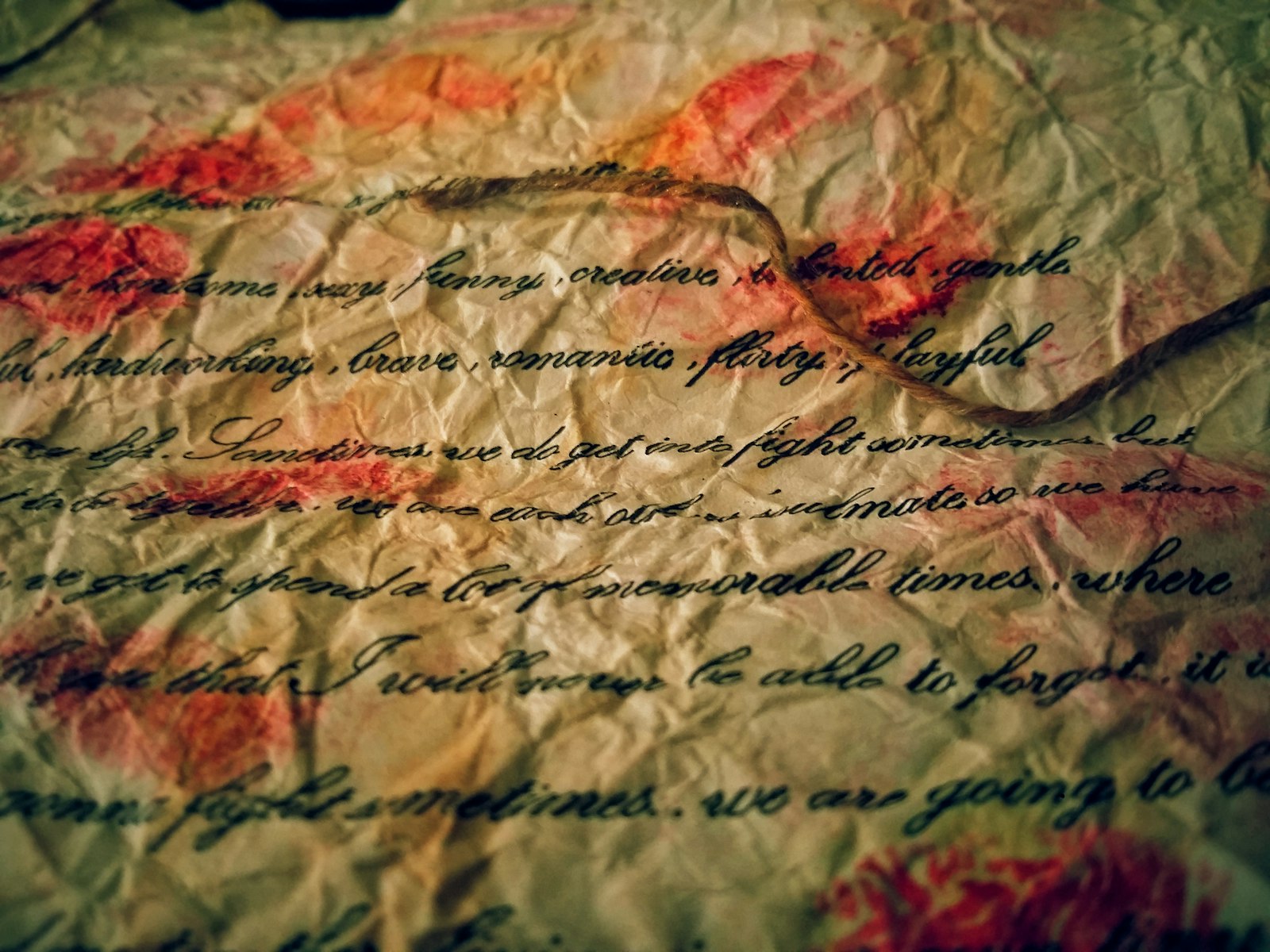
Each cycle of the loop, a little more texture gets sanded off. A regional turn of phrase. A weird metaphor. A sentence that runs on too long because the writer was excited. The verbal hesitation that signals an actual person on the other end of the keyboard. Each pass through the loop, all of it gets a touch smoother, a touch more anonymous.
It's the prose equivalent of photocopying a photocopy. The first generation looks fine. By the tenth, you've lost the contrast. By the hundredth, all that's left is a vague suggestion of where the edges used to be. I wrote about this last year in a more technical register; what I missed at the time is that the same pattern applies to humans, not just to models trained on synthetic data.
We are not, as the headlines worry, building AI that sounds eerily human. We are building humans that sound eerily AI.
This started long before ChatGPT
I want to be honest about something. The flattening of human voice did not begin with large language models. Every consultant I worked with in the 2010s already wrote in the same crisp McKinsey-adjacent dialect. Every TED talk had the same three-act arc. Every product launch went through the same gauntlet of comms editors who removed anything sharp, idiosyncratic, or interesting before it shipped.
AI didn't invent the homogenisation problem. It industrialised it. What used to take a comms team and a week of revision now takes a single button press, and the floor of acceptable writing has been raised everywhere - but the ceiling has quietly come down too.
The teams I work with have stopped sending me emails that sound like them. They send me emails that sound like the median of a thousand emails the model has seen. The information is there. The person is mostly not.
What readers can sense but can't name
I've been doing a small experiment with the LinkedIn posts I read. When one lands - the kind that makes me stop scrolling and actually think - I check. Almost always, it has at least one of three properties. A specific, slightly weird detail no model would have generated. A clear opinion the writer commits to even though it makes them slightly wrong. Or a sentence with the wrong rhythm - too long, too punchy, slightly off-balance - that betrays a human being making a choice.
Conversely, the posts I scroll past have none of these. They're polished. They're balanced. They contain a useful framework. And they evaporate from memory the moment I'm done with them.
The detection isn't conscious. Most readers couldn't articulate why one post felt human and another felt synthetic. But the discount is real. Trust in the average piece of professional writing has been quietly eroding, and the average writer doesn't realise their own contributions are part of what's eroding it. There's a related piece I wrote about how readers learn to spot model voice - the short version is, faster than the model is improving.
I am not innocent here
I'm writing this in a doc that I will, at some point, ask Claude to look over. I use AI constantly. I would not get my work done without it. I am part of the loop I am complaining about, and pretending otherwise would be the most dishonest move I could make in a piece about honesty in voice.
What I've started doing - and I mean started, this is recent and I'm not yet sure it'll hold - is treating AI as an editor and not a writer. The first draft is mine, typed with mistakes, in my voice, with whatever weird metaphor showed up. Then the model gets to tell me where I've been unclear. It does not get to tell me where I've been too unpolished.
The output is worse-looking. The output is more mine. The trade is, for now, worth it.
What to actually do
I don't have a tidy framework for this - I'd be undermining my own argument if I produced one - but a few things have helped me, and the people I've talked to about this, hold onto a recognisable voice.
Write the first draft before opening a model. Even if the draft is bad. Especially if the draft is bad. The model is very good at fixing a flawed human draft. It is much worse at producing a flawed human draft from scratch, because it has been trained, hard, to remove exactly the flaws that make writing feel personal.
Read what you wrote aloud. AI-generated prose almost always trips on the second or third sentence - too long, too balanced, an unnatural pivot. Your own prose will trip too, but on different things. You can hear the difference.
Keep three or four sentences you've written that sound unmistakably like you. Paste them in as examples when you do use the model. The output is dramatically more yours, for almost no effort. You're pre-loading the loop with your own voice instead of waiting to be flattened by the average.
And for the love of everything, stop opening emails with "I hope this finds you well." Nobody says that out loud. The model says it because everyone has been saying it, and everyone has been saying it because the model said it first. The loop starts there as much as anywhere.
The risk is small and large at once
If you zoom out, none of this matters in the way that, say, model safety matters. Nobody gets hurt because LinkedIn sounds the same. No regulator is going to step in because business writing has lost its character. The world will keep turning.
But if you zoom in, every single one of us is making thousands of micro-decisions a year about whether to sound like ourselves or sound like the model. And the cumulative effect of those decisions - over a million people, over a few years - is a quiet narrowing of the range of human voice on the open internet. That feels worth resisting, even if the cost of resisting it is the occasional paragraph that doesn't quite scan.
The thought I had on LinkedIn last night, the one that started this, wasn't really about AI. It was about us. We had something we were quietly losing, and we weren't talking about it, because the loss looked, on the surface, like an improvement.
The risk isn't AI becoming human. It's humans becoming a little too robotic.
I think we should sound like ourselves again. Mistakes included. Especially the mistakes.


Discussion