President Biden signs an AI executive order that starts to assemble the federal apparatus the United States had not built
Reporting thresholds for the largest training runs, an instruction to NIST to write standards, and a directive across half the cabinet. The order survives one presidential transition, partially.
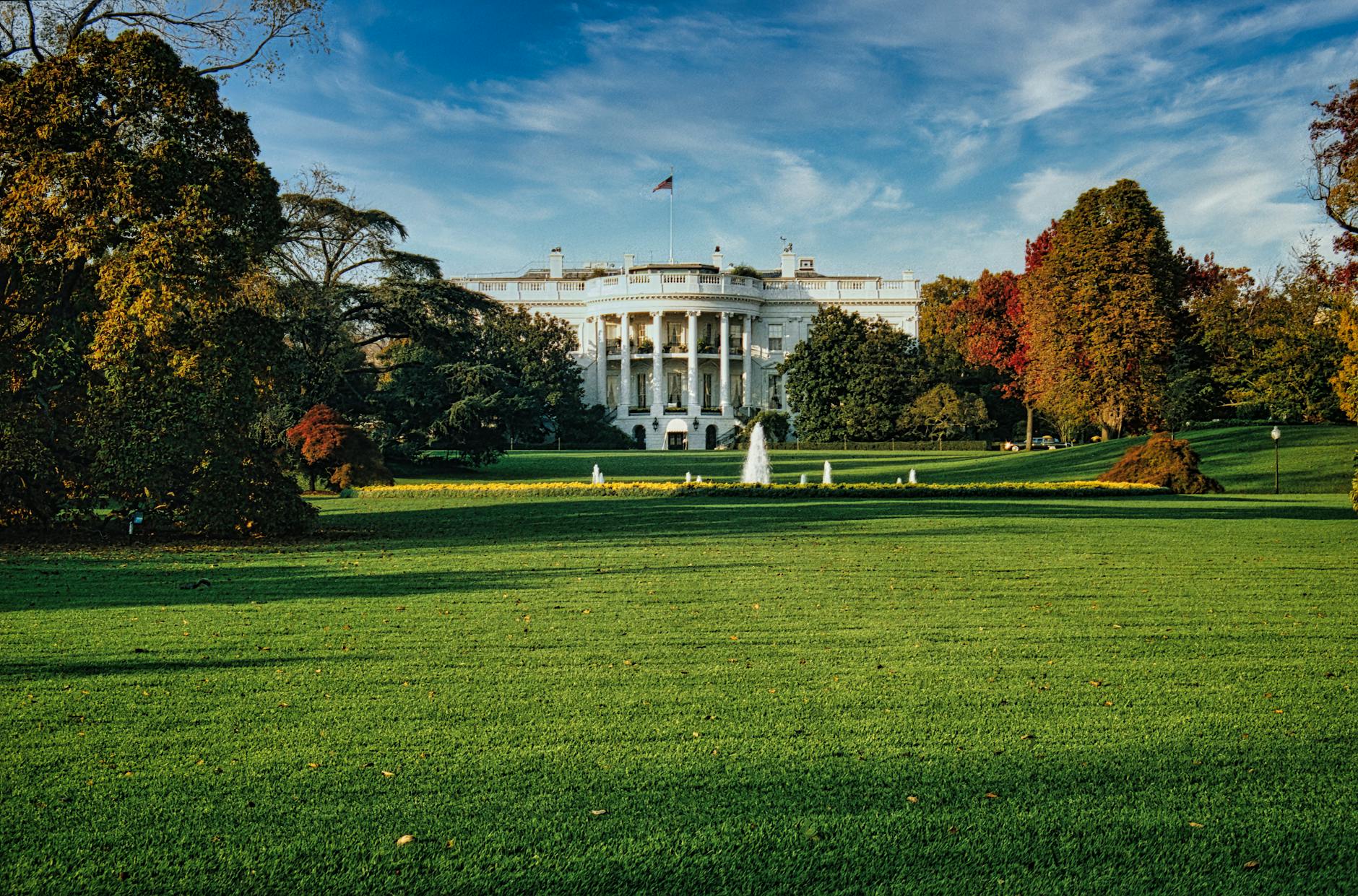
On 30 October 2023, two days before the Bletchley Summit, President Joe Biden signed Executive Order 14110, on the Safe, Secure, and Trustworthy Development and Use of Artificial Intelligence. At more than fifteen thousand words, it was the longest single-subject executive order in modern presidential practice. As the New York Times reported on the day, it was less a single instrument than a manifest of ninety-odd specific directives spread across the Departments of Commerce, Defense, Energy, Health and Human Services, Homeland Security, Justice, State, and Treasury, and the Office of Management and Budget.
Three load-bearing provisions
The order's most-cited clause was the reporting threshold for foundation models, set at training compute of ten to the twenty-sixth floating-point operations or models trained primarily on biological sequence data. As written, the threshold sat above any model that had then been publicly trained. The Defense Production Act was used as the legal basis to compel reporting from any developer crossing the line. The second was a directive to the National Institute of Standards and Technology to develop AI evaluation standards, which produced the work that would later anchor the AI Safety Institute. The third was an instruction to the Department of Commerce to issue guidance on watermarking and provenance for synthetic content.
Within ninety days of signing, as reported by Politico's tech newsletter that quarter, four major US labs had filed their first reports under the order's threshold. The reports were not made public; the existence of the regime, in retrospect, was the more durable signal.
It was not a law. It was an audit trail.
What survived the 2025 repeal
EO 14110 was rescinded on 20 January 2025 in one of the first executive actions of the new administration. The repeal removed the legal compulsion behind the reporting thresholds and the watermarking directive. Several of the operational structures the order had stood up, the AI Safety Institute, the foundation-model evaluation working groups, and most of the workforce-and-immigration provisions, persisted in less prescriptive form, in some cases moving from executive direction to congressionally appropriated funding. The institutional vocabulary mostly survived. The legal force did not.



Discussion