Ada Lovelace saw the whole argument in 1843
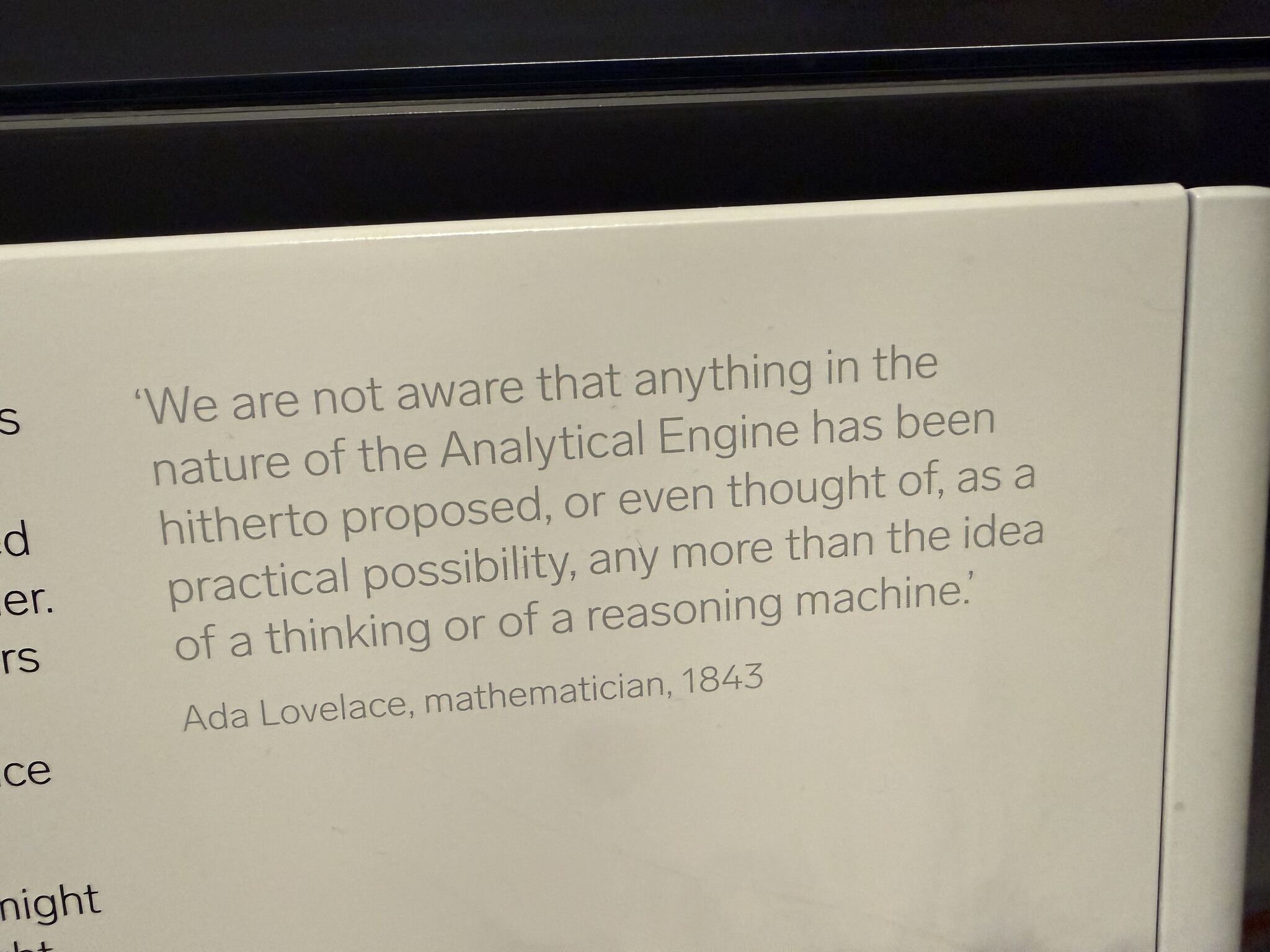
The quote, from her annotations on the Analytical Engine, is the one where she notes that the machine could, in principle, act upon anything whose relations could be expressed symbolically. Numbers, yes. But also language. Music. Anything reducible to a system of symbols with consistent rules. The substrate of the machine, in her framing, does not care what its symbols stand for. That is the whole conceptual leap that makes modern computing, and eventually large language models, intelligible.
She wrote this in 1843. Public electricity was still decades away. Silicon as a manufactured material was eighty years off. There was no working Analytical Engine; Babbage never completed one. She was describing the logical structure of a programmable computer entirely in her head, and she got the architecture right on the first pass.
What her argument actually was
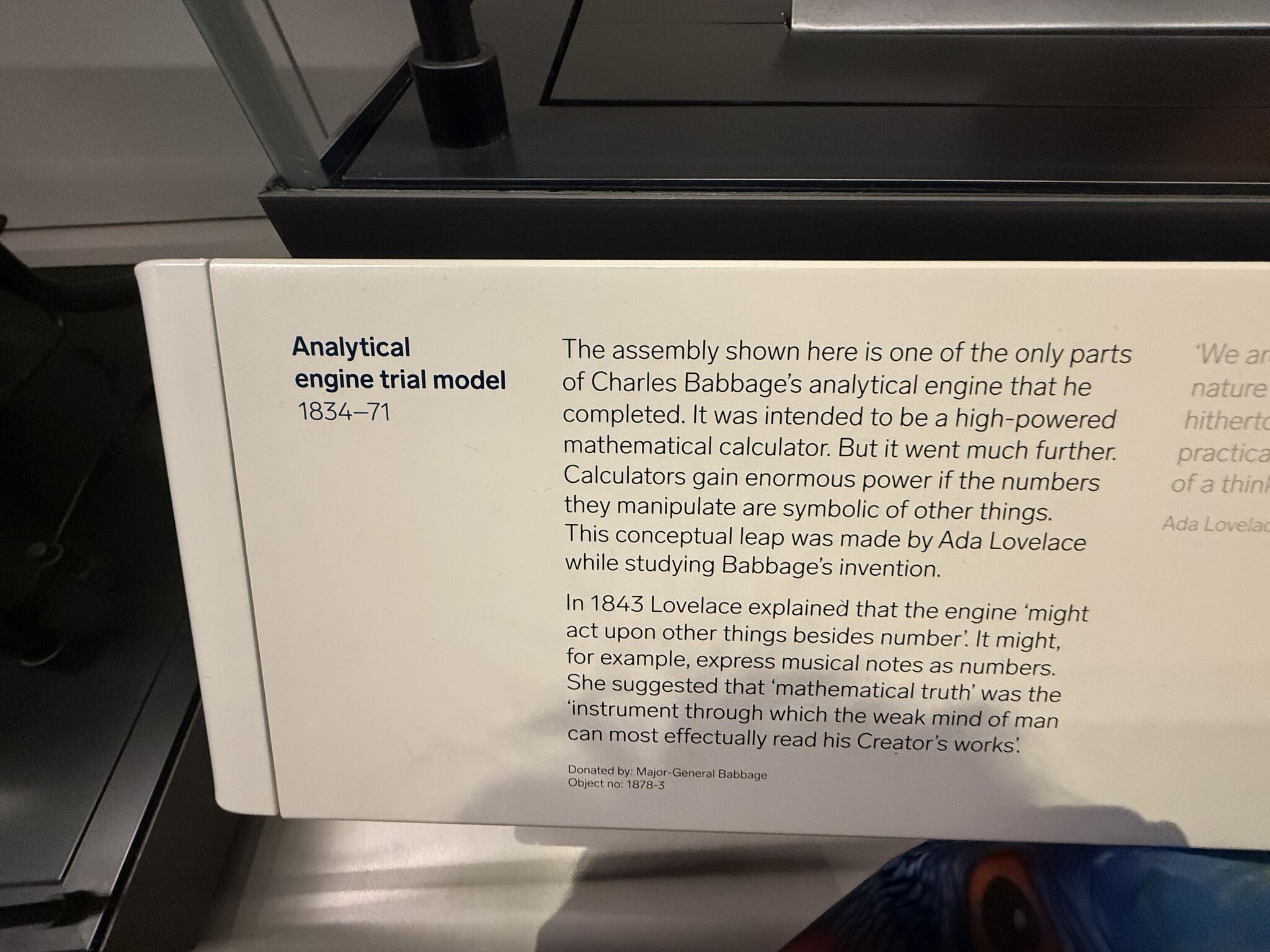
The conventional potted history puts Lovelace down as the first programmer because she wrote an algorithm for computing Bernoulli numbers. That's the shortest version of the claim, and it's true, but it undersells her. The first programmer is a job title. The more interesting claim in her notes is much wider. She argued that a machine that could manipulate symbols according to explicit rules could, in principle, be applied to any domain where the domain itself could be reduced to symbols and rules. The choice of symbols, she was careful to note, is not the machine's problem. It is the problem of whoever uses the machine.
Strip the Victorian cadence off that claim and you have a remarkably modern statement of what computers are for. The substrate is general-purpose. The domain-specificity lives in the representation and the user's intent. Everything we've built since, from accounting systems to speech recognition to modern LLMs, is a particular case of the general argument she set out in Note G.
What she was careful not to claim
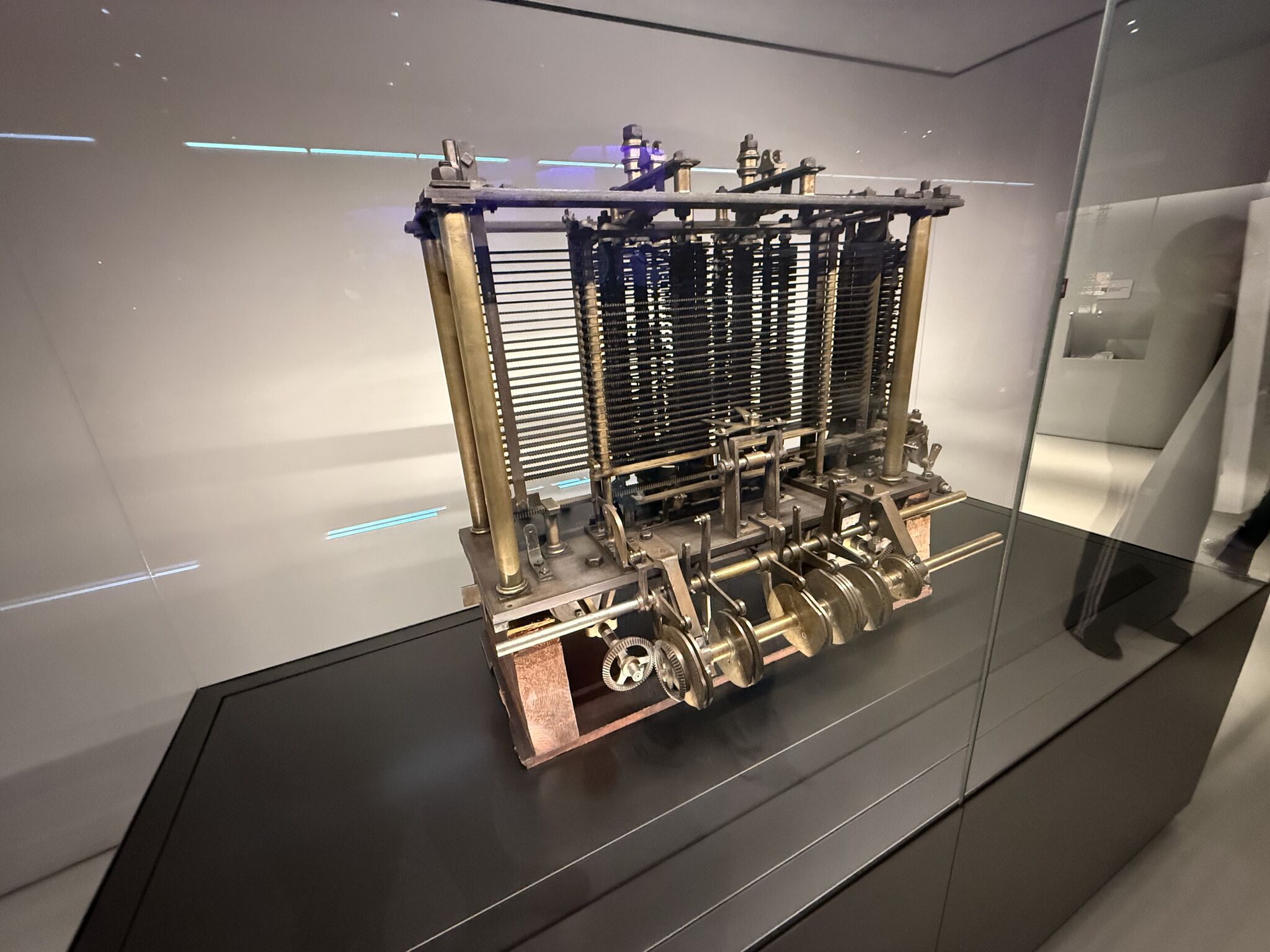
The reason the quote survives rereading is the hedge she wrote into it. Lovelace was also clear that the machine, in her view, had no pretensions to originate anything. It could only do what it was instructed to do. This is the part the popular retelling often drops, because it complicates the neat 'Lovelace predicted AI' headline.
That qualification - sometimes called the Lovelace Objection - is the oldest and most durable formulation of the AI consciousness debate. Alan Turing addressed it directly in the 1950 paper. Current policy documents grapple with it, mostly badly, under labels like 'autonomy', 'agency', or 'foundational creativity'. The question of whether a system that acts in increasingly flexible ways is originating anything, or just executing instructions embedded deep in its training data, is exactly Lovelace's question. We have not answered it. We have built larger and larger examples of it.
She didn't say the machine would think. She said it could act on anything that could be reduced to symbols.
Why this matters in 2026
The current debate about what AI can and cannot do is largely a debate about which things in the world can be usefully reduced to symbols. If a thing can be represented, the machine can operate on it. If it can't, no amount of compute will help. This is why the tasks that resist AI are rarely the ones that look technically hard - they're the ones that resist clean symbolic representation. Embodied craft, tacit social knowledge, the kind of judgement that depends on being present in a room. Not impossible, but not simply a matter of more parameters.
Lovelace got this right. She also did not assume the question would be answered in her lifetime, or in the next century. She set out the terms and left the rest of the argument to everyone who came after. The reason her prose still reads well is that she was rigorous about what she was claiming. She described a logical architecture. She declined to speculate about consciousness. She left room for her successors to fill in the gaps without embarrassing her.
A reading test
If you have thirty minutes to spare this week, find the full text of Note G. It's available free online, ten pages long, and denser than anything you'll read in a current AI book. It is also a useful reading test. If, a hundred and eighty years after publication, you find the argument as intact as I did in front of that Science Museum case, you'll understand why I spent the walk home thinking about it rather than the exhibition I'd actually gone to see.
Most influential writing dates badly. Lovelace's notes have aged strangely well, largely because she was careful about the part of the argument she could defend and cautious about the part she couldn't. That combination - confidence about the structure, humility about the interpretation - is the one I keep trying to copy in my own notes, and mostly failing.

Discussion